

Sisterdale VFD Firefighter Explains Why Some Hill Country Homes Survive Wildfires
Found this article helpful?
Share it with your network and spread the knowledge!
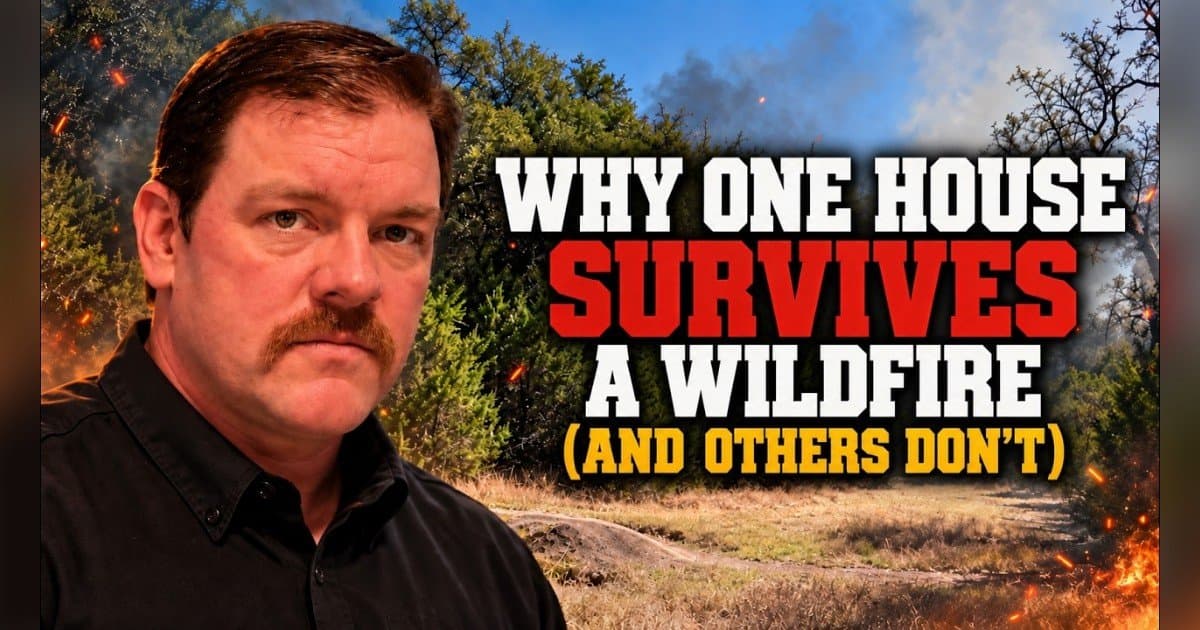
As new large-scale homes push deeper into the Texas Hill Country's wildland urban interface, a volunteer firefighter from the Sisterdale Volunteer Fire Department is offering a blunt, science-based explanation for why some houses survive wildfires while others are destroyed. In the final installment of The Building Texas Show's Sisterdale VFD series, titled "Why One House Survives a Wildfire (And the Rest Don't)", host Justin McKenzie and his guest dissect the mechanics of wildfire behavior and the practical steps that can mean the difference between loss and survival. The episode arrives as 10,000 and 15,000 square foot homes proliferate in fire-prone areas, making the conversation urgently relevant for builders, homeowners, and local officials.
The firefighter explains that Ashe juniper, the native "mountain cedar," has overpopulated the Hill Country after a century of fire exclusion, creating dense, volatile fuels. Grass fires can escalate into crown fires through "ladder fuels" loaded with oils and terpenes, turning ordinary brush into a firestorm. He also points to California subdivisions built into box canyons as cautionary tales, noting that Texas builders chasing picturesque ridgelines risk similar outcomes.
On the question of why some homes survive, the guest pushes back on conspiracy theories, stating that survival often comes down to "very simple, subtle things" rather than wealth or luck. He cites the surviving homes in the Maui fires as examples of how small, deliberate choices—such as fire-resistant materials and defensible space—can make a house "very hard" to burn.
The episode serves as a practical field guide. The firefighter credits Christy Wiley as the driving force behind Kendall County's Community Wildfire Protection Plan, which recently completed its 50th wildfire danger assessment survey and helped seed the new Hill Country Fire Coalition, working alongside Team Rubicon. He directs listeners to revamped Texas A&M Forest Service materials on defensible space, including the 0 to 5 foot and 5 to 20 foot zones around a structure, soffit and gable vent intakes, and Firewise planting guidance.
A key takeaway is the value of residential sprinklers in new rural construction. The firefighter estimates they add just 2 to 3 percent to construction costs, with heat-activated heads that fire individually, not all at once as depicted in movies. He also warns that week-old brush piles, not controlled burns, cause some of the county's worst fires.
For those looking to support local firefighting efforts, the Sisterdale VFD will host its 49th Annual Hunters Supper & Firearms Raffle on Saturday, Nov. 14, 2026, from 5 to 9 p.m. at the William "Bill" Whitworth Fire Station, 1207 Sisterdale Rd., Boerne. The event features BBQ plates, a Cajun shrimp dinner, homemade desserts, and a raffle drawing at 8:30 p.m. with a 2026 Special Edition Custom Sisterdale VFD Henry 30-30 rifle as the featured prize, along with firearms, scopes, knives and more. Tickets are $10, winners need not be present, and firearm winners must complete the transfer through a licensed FFL. Proceeds support gear, equipment, and day-to-day needs, including a new covered bay. Tickets and the full prize list are available on the department's Hunters Supper & Raffle page.
For Texas businesses and residents, the episode underscores a growing challenge: as development expands into wildfire-prone landscapes, the economic and human costs of inaction rise. The solutions discussed—from community planning to individual home upgrades—offer a roadmap for mitigating risk while accommodating growth, making this a story of resilience and responsibility in the face of natural hazards.