

Huawei Unveils Network Breakthroughs at Decoding China 2026, Setting Stage for Next-Gen Communications
Found this article helpful?
Share it with your network and spread the knowledge!
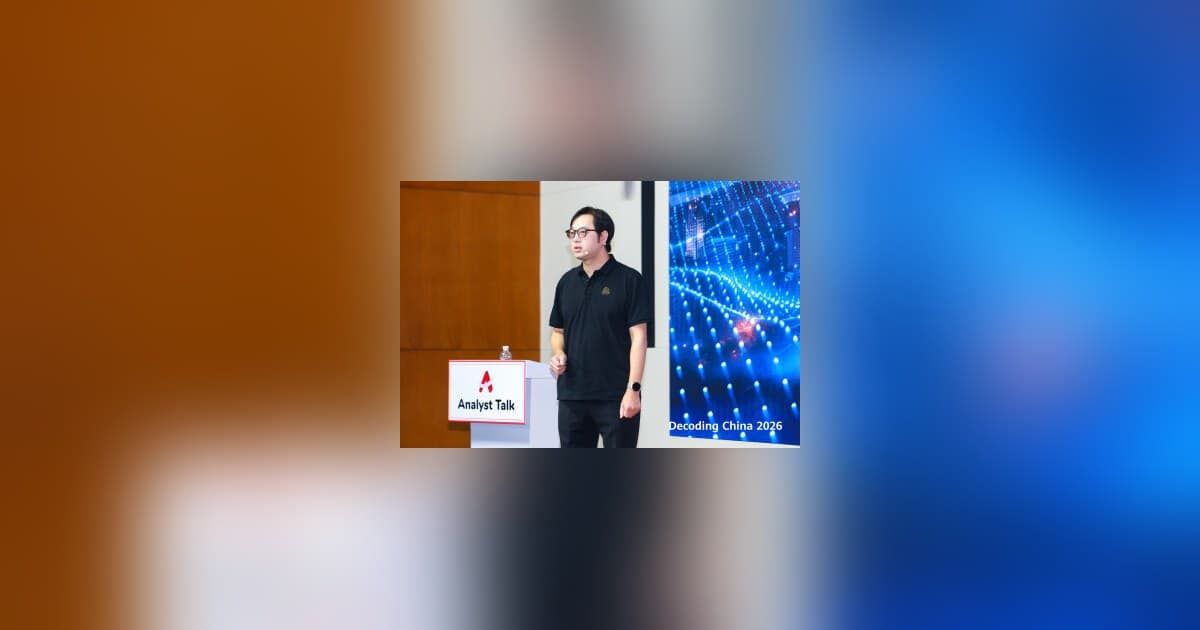
At Huawei Decoding China 2026 in Shanghai, Fang Xiang, Corporate Vice President and President of Wireless Network Solution of Huawei, introduced a series of innovation breakthroughs designed to pioneer new communications networks. The announcements, detailed in a release distributed via Media OutReach Newswire, center on root technologies addressing ubiquitous experience, simplified and green networks, and superior spectral efficiency. Huawei also launched the world's first commercial U6 GHz device VitaAAU, the GigaGreen Plus series, and the UBBPi series, while outlining progress in open ecosystems for telecom agents.
The urgency behind these breakthroughs stems from shifting mobile industry dynamics. Intelligent devices and services are expanding connectivity from people to things and agents, with connections projected to increase 100-fold. Device-cloud synergy for intelligent services demands stronger uplink capabilities to support training and inference, moving networks from downlink dominance to balanced uplink and downlink performance. New applications and interaction modes also require ubiquitous, steady ultra-low latency with high reliability. As the world enters an intelligent era, the value of connectivity is increasingly about quality rather than quantity.
To address concurrent ultra-high bandwidth and ubiquitous coverage, Huawei introduced RetinaMIMO, featuring the industry's first Retina scanning system that reconstructs RF link topologies to eliminate vertical coverage collapse. Based on this technology, the commercial U6 GHz device VitaAAU widens coverage by about 30% compared with similar products using 1024 antenna elements, enabling U6 GHz to match C-band coverage in both horizontal and vertical directions. This allows operators to deploy U6 GHz on existing C-band sites, minimizing total cost of ownership. VitaAAU has already seen commercial adoption in the UAE and other markets, with peak downlink speeds exceeding 10 Gbps.
For simplified and green networks, Huawei's EP power amplifier architecture leverages new materials and technologies to maximize energy conversion efficiency on higher frequency bands. The industry's first multimode dielectric filters enable small antenna dimensions and low power consumption on high-frequency, multi-channel networks. These innovations allow the VitaAAU antenna to be reduced to 1.5 meters in diameter while supporting "0 Bit 0 Watt 0 Loss," and they underpin the GigaGreen Plus series' reductions in dimensions, weight, and power consumption.
On spectral efficiency, Huawei's OSCAR solution introduces the time scaling of the Tau law to base stations for optimal dynamic resource scheduling across all domains. Combined with low-latency bus and high-speed interconnect technology, the new UBBPi series improves average user experience by 1.3 times while reducing power consumption by approximately 40%. In autonomous networks, Huawei's RANSpirit implements single-domain network autonomy based on a telecom foundation model and digital twins, and is already serving more than 1.2 million cells across 25 networks worldwide, assisting over 2,000 engineers.
Huawei is also pushing open collaboration, promoting A2A-T standards and commercial open-source OpenAN through partnerships. The company is working with industry partners on standards aligned with TM Forum, donating open-source agent components to the Linux Foundation, and leveraging the GSMA industry platform to accelerate business implementation. For Texas businesses and the broader telecom sector, these developments signal a push toward more efficient, higher-capacity networks that could lower deployment costs and support new intelligent services—factors that may influence infrastructure investment and competitiveness as operators plan for the next wave of connectivity.