
DH Unplugged Episode 819: Bessent's 'Counterfactual' Defense, SoftBank's Junk Bonds, and Consumer Gloom
Found this article helpful?
Share it with your network and spread the knowledge!
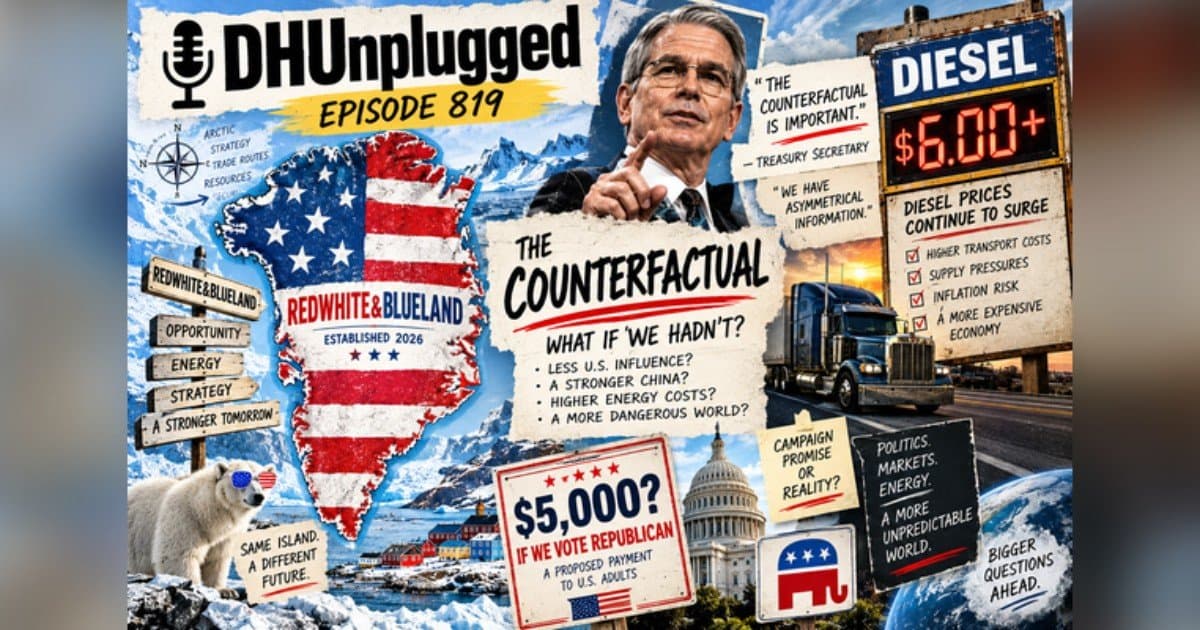
In the latest episode of DH Unplugged, hosts Andrew Horowitz and John C. Dvorak deliver a sharp analysis of Treasury Secretary Scott Bessent's contentious testimony before the House Financial Services Committee on September 15. Bessent's defense of the government's bond-buying program, hinging on the phrase 'there's a counterfactual of what it would have done,' has drawn scrutiny for its lack of falsifiability. Horowitz, a registered investment advisor, warns that such rhetoric obscures economic reality. 'By him saying it, he created a non-provable element... it dilutes the reality of what's going on so that you don't know what's happening,' Horowitz argues. Dvorak, drawing on causal-analysis expertise, notes that legitimate counterfactuals require control groups or historical analogs, not mere assertions. This exchange matters because it underscores the growing challenge of holding policymakers accountable when their claims evade empirical verification. For Texas businesses, which depend on stable fiscal and monetary conditions, such ambiguity can complicate planning and investment decisions.
The episode also spotlights SoftBank's Masayoshi Son borrowing approximately $11 billion at junk-bond rates to fund ChatGPT-related investments. This aggressive leverage raises questions about the sustainability of the AI boom and its spillover effects. Texas, home to a burgeoning tech sector and major data-center hubs, could feel ripple effects if AI investments face a correction. Meanwhile, a Goldman Sachs note suggesting American consumers are simply unhappy adds another layer of caution. Consumer sentiment drives spending, and Texas's retail and service industries are particularly sensitive to shifts in confidence. Horowitz and Dvorak connect these dots, offering listeners a framework to assess risks.
Market structure takes center stage as the hosts break down index construction, contrasting the market-cap-weighted S&P 500 with the equal-weighted RSP ETF and the price-weighted Dow Jones Industrial Average, where a single dollar move in Caterpillar translates to roughly seven Dow points. They revisit their long-running Generac (GNRC) seasonality trade, now reshaped by data-center power demand, and name Seagate, Western Digital, and Micron among 2026's stealth outperformers. These insights are actionable for Texas investors and business leaders navigating a narrow, tech-driven rally that has pushed the NASDAQ 100 to fresh highs.
Additional segments cover Warren Buffett stepping down as Berkshire Hathaway chair, with Howard Buffett taking the seat and Greg Abel running operations; Meta's Ray-Ban Luxottica smart glasses facing a Paris prosecutor probe over covert filming; and Greenland-linked equities Greenland Minerals (GRML) and Critical Metals (CRML) surging on Trump's expanded Danish security deal. The hosts also question Bentley's $300,000 electric SUV as a luxury downgrade. For Texas, these stories highlight interconnected global risks and opportunities—from leadership transitions at major conglomerates to regulatory scrutiny of tech products and geopolitical shifts affecting commodity markets. Episode 819 equips listeners with the skeptical, data-driven perspective needed to interpret an increasingly complex economic landscape.