

Avatar Medical Integrates with Epic to Bring Real-Time 3D Anatomy to Clinical Consultations
Found this article helpful?
Share it with your network and spread the knowledge!
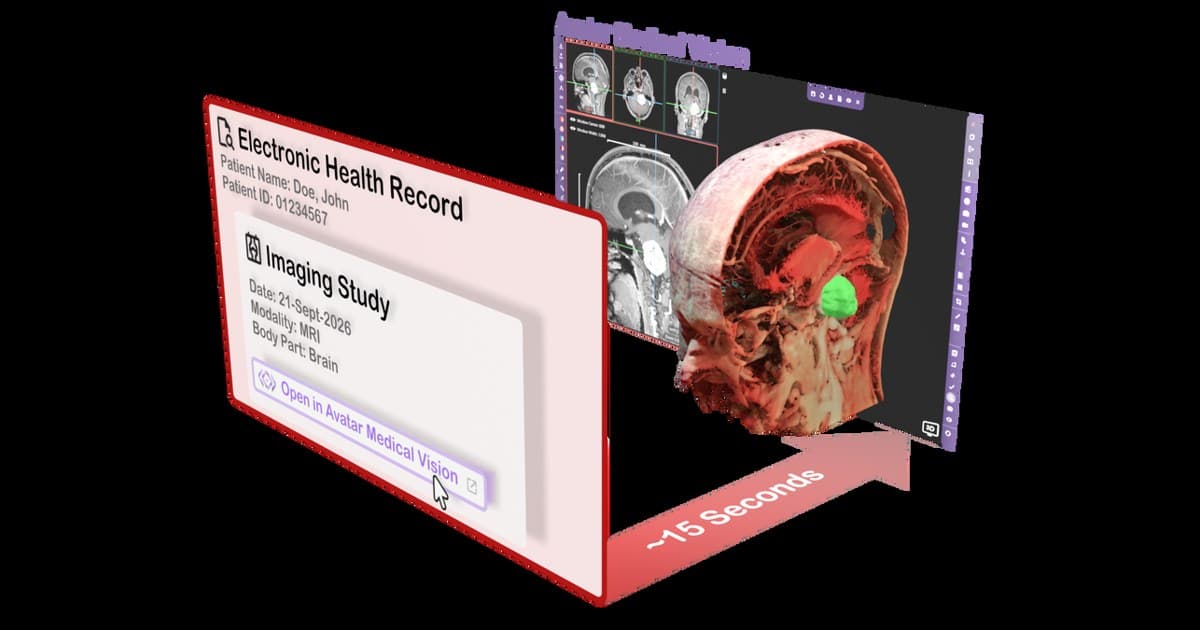
Avatar Medical, a pioneer in real-time, patient-specific 3D medical imaging, announced on October 1, 2026, that its flagship solution, Avatar Medical Vision, can now be launched directly from within a patient's Epic Systems electronic health record (EHR). This integration marks a significant step forward in making advanced visual intelligence a seamless part of clinical workflows. For Texas healthcare providers and medical technology businesses, this development signals a broader trend toward integrating sophisticated imaging tools into everyday practice, potentially enhancing both surgical outcomes and patient engagement.
The new Epic integration allows clinicians to access interactive 3D anatomy in just a few clicks, without leaving the patient's electronic health record. Avatar Medical Vision transforms standard CT and MRI scans into interactive, lifelike 3D representations instantly and without the need for segmentation. This means that during a consultation, a physician can show a patient their own anatomy in 3D, helping to explain complex conditions and treatment options more clearly. The ability to launch this directly from Epic, one of the most widely used EHR systems in the United States, reduces friction and saves valuable time. For a full announcement, including downloadable images and bios, click here.
The implications for the healthcare industry are substantial. By bringing patient-specific 3D closer to the clinical conversation, Avatar Medical is addressing a critical need: better communication between clinicians and patients. When patients can see their own anatomy in an interactive format, they may better understand their diagnosis and the rationale behind a proposed procedure. This can lead to more informed consent, reduced anxiety, and improved satisfaction. For surgeons, the integration means they can plan procedures with greater confidence, potentially reducing operating time and complications. As healthcare systems continue to digitize, tools that integrate seamlessly with existing EHR platforms are likely to see rapid adoption.
Avatar Medical's broader vision is to make visual intelligence accessible throughout the surgical care journey, from consultation and preoperative planning through the operating room. The first implementation of this Epic integration is underway at UHealth - University of Miami Health System, indicating that the technology is already being tested in a real-world clinical setting. Founded in 2020, Avatar Medical has FDA-cleared and CE-marked products and works with more than 20 hospitals across the U.S. and Europe. The company's origins in research conducted at Institut Curie and Institut Pasteur lend it scientific credibility. For Texas, which boasts a growing health tech ecosystem and numerous top-tier medical institutions, this news highlights the importance of adopting innovative technologies that can improve patient care and operational efficiency. More information about the company is available at avatarmedical.ai, and members of the media can access additional assets through the press kit.
As healthcare continues to evolve toward more personalized and visual approaches, integrations like this one between Avatar Medical and Epic could become a standard expectation. For Texas businesses involved in medical imaging, software development, or hospital administration, the message is clear: embracing interoperable, patient-centric tools is no longer optional but essential for staying competitive. The ability to launch interactive 3D from within the EHR represents a leap forward in clinical efficiency and patient communication, with potential ripple effects across the entire care continuum.