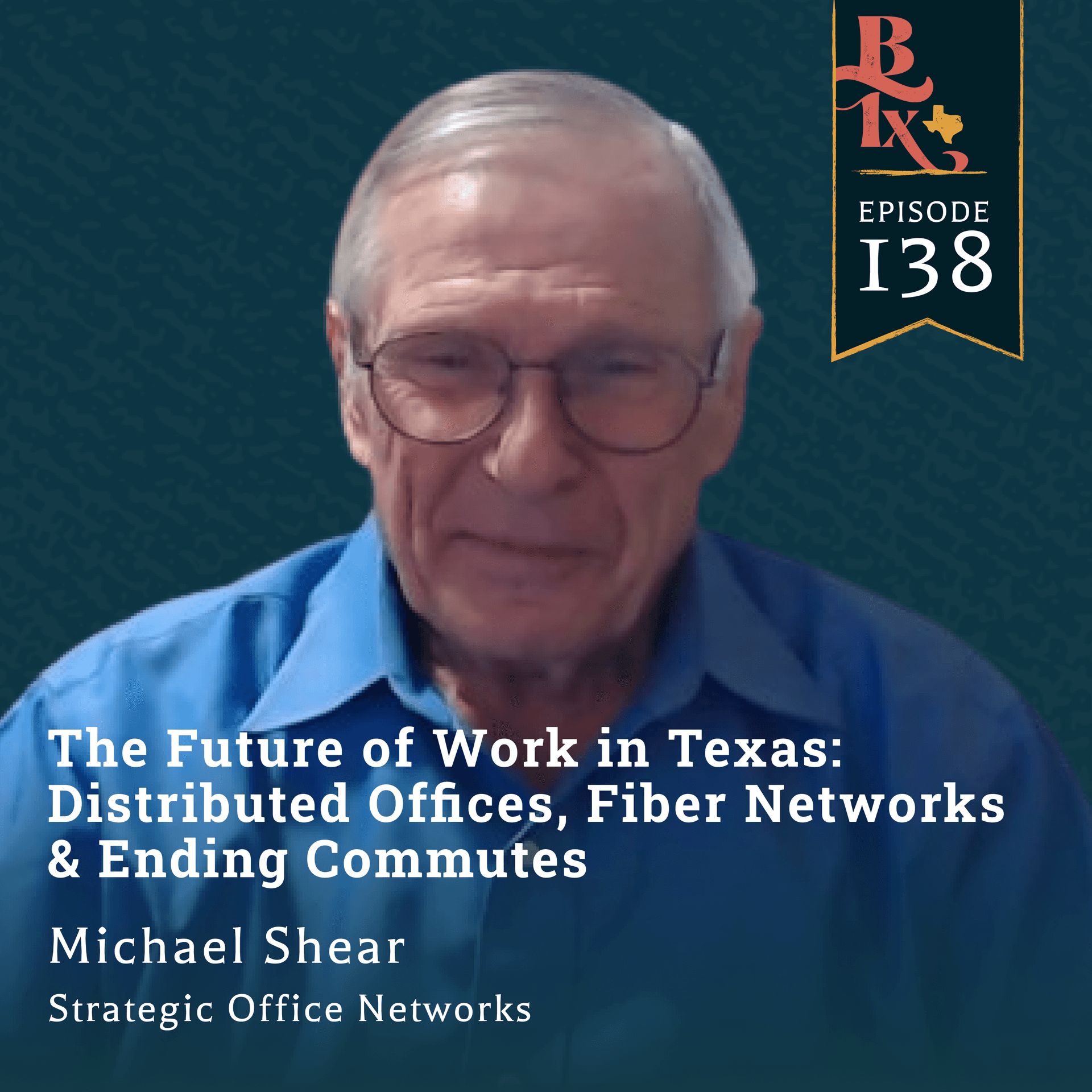
How will Texas handle explosive growth, workforce demand, and traffic congestion? In this episode of The Building Texas Show, Justin McKenzie sits down with strategist Michael Shear to explore how distributed office networks, fiber infrastructure, and edge computing could reshape the future of work in Texas.
As Central Texas continues to expand, the traditional model of commuting into downtown office towers is being challenged. Michael Shear explains how new technologies — including dedicated communications networks, edge computing, and distributed office hubs — could allow workers to live closer to home while staying connected to global organizations.
The conversation explores how communities across Texas could redesign infrastructure to improve quality of life, reduce traffic congestion, strengthen economic resilience, and create new workforce opportunities.
From Austin to Luling to Cedar Park, this discussion highlights how the next generation of infrastructure may focus less on highways and more on digital connectivity.
Topics include:
• The concept behind Strategic Office Networks
• Why distributed work hubs could reshape Texas cities
• The role of fiber networks and edge computing in economic development
• How congestion and commuting impact quality of life
• Why city planners and developers must think differently about infrastructure
• The connection between workforce mobility, housing affordability, and technology
This conversation offers a compelling vision for how Texas communities could evolve over the next 50 years.
Subscribe to The Building Texas Show for more conversations with the leaders shaping the future of Texas.