

Vail's Housing Market Defies Simple Trends, Realtor Says
Found this article helpful?
Share it with your network and spread the knowledge!
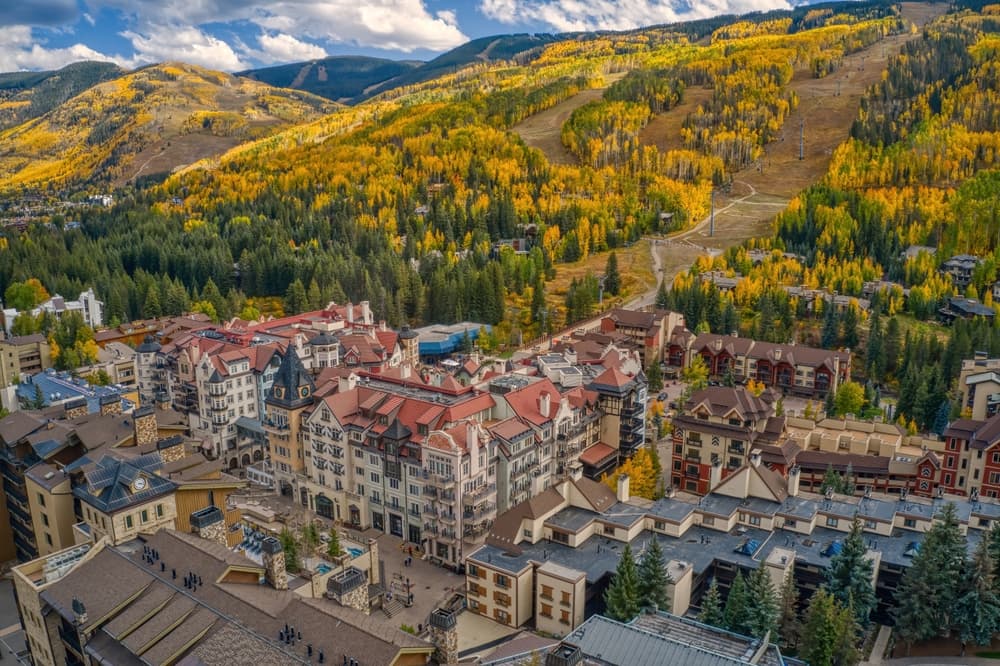
In most real estate markets, buyers and sellers rely on general trends—whether it's a buyer's or seller's market—to guide their decisions. But in Vail, Colorado, that approach is becoming increasingly unreliable, according to Mark Gordon, a realtor with Christiania Realty and the incoming president-elect of the Colorado Association of Realtors. Gordon explains that the traditional buyer-versus-seller market framework has broken down in Vail, where the most useful question is not about the market as a whole, but about the unique characteristics of each property.
One of the biggest pitfalls for buyers is the misuse of a single comparable sale. Gordon notes that a buyer might see a home sold for nine percent under asking and assume that discount applies across the board. "That becomes confusing for buyers," he says. "They think every place should go nine percent under asking. But in fact there are still places that go over asking." A single data point, when applied universally, can mislead buyers and cause them to miss out on the right property.
Recent market data shows that many active listings have reduced prices, and nearly all closed sales settled below original asking. At first glance, this might suggest a declining market. However, Gordon clarifies that this is not a sign of retreat but rather a correction for overpriced properties. "Prices have flattened," he says, "but places that are overpriced sit, and places that come on priced right, that are a perceived value, get multiple offers immediately." The distinction between a flat market and a falling one is crucial, as conflating the two can lead buyers to misjudge their negotiating power.
Vail also stands apart from national trends. While the U.S. housing market has seen sales hover around four million annually, giving buyers more leverage in many areas, Vail's supply is structurally limited. Each property is genuinely unique, and the inability to expand inventory insulates the town from the broader softening seen elsewhere. A framework designed for primary-residence markets does not translate to a place where inventory cannot grow.
Given these conditions, waiting for a better market is often the wrong strategy. Gordon recently assisted clients who had been considering Vail for years. They found a complex where inventory had stalled, and owners were pricing against each other rather than against demand. The clients made what Gordon describes as a "bold but not disrespectful" offer, secured a discount, and closed on a home they plan to hold for generations. "Every house in Vail is unique," Gordon says, "and you don’t wait for the market trends to make your purchase or sell."
For those navigating this market, the key is to distinguish a genuinely well-priced property from one that is cheap for a reason. This requires a property-by-property analysis rather than relying on broad market indicators. As Gordon emphasizes, in a market with no single trend line, the only way to make a sound decision is to read each house individually.