

New Study of 12 Million Workers Reveals Which Employers Truly Build Careers
Found this article helpful?
Share it with your network and spread the knowledge!
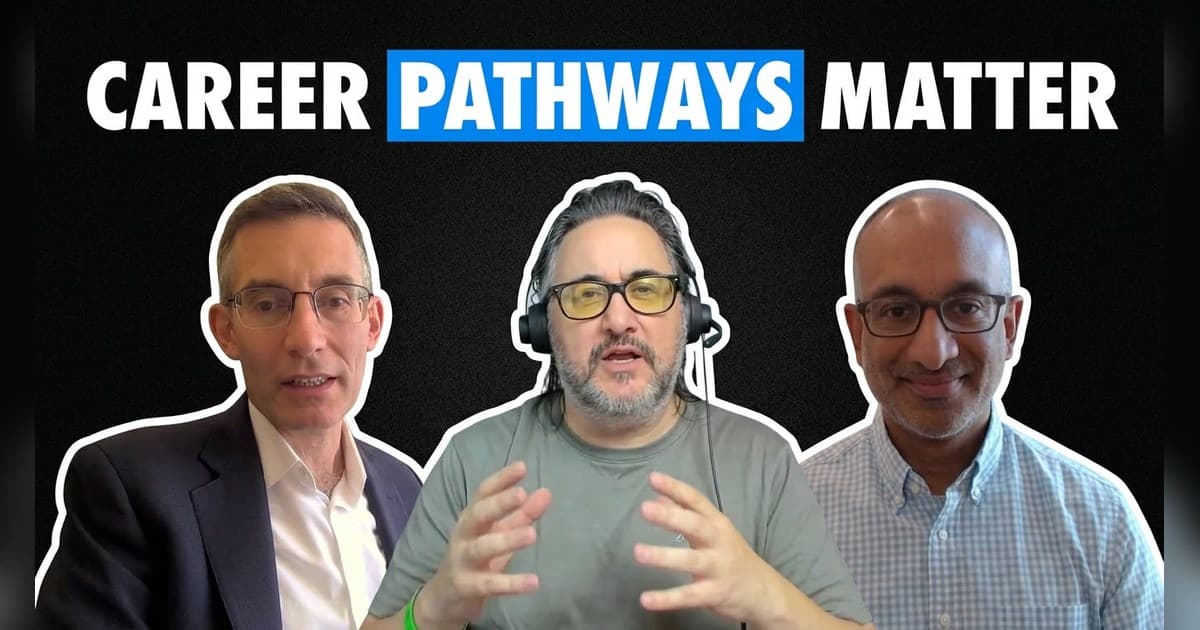
A groundbreaking study released by the Burning Glass Institute and the Schultz Family Foundation has analyzed 12 million career histories to rank 1,750 of America's largest employers based on actual career outcomes, not corporate promises. The findings, detailed in the 'Where You Work Matters' project, provide a stark look at which companies genuinely foster upward mobility, and the implications are significant for Texas businesses competing for talent in a rapidly changing labor market.
The research, discussed on the 'You Should Know' podcast hosted by William Tincup of WRKdefined, was developed by Matt Sigelman, president of the Burning Glass Institute, and Rajiv Chandrasekaran, Managing Director of the Schultz Family Foundation. Using a database of 12 million career histories across 1,800 companies, the study measures promotion velocity, retention, pay growth, and regrettable turnover—the latter being a key metric that separates true career builders from those that merely retain employees.
Sigelman explained the core question behind the research: 'If two people start in the same role at directly competing firms, how likely are they each to move up? How likely are they each to stay? How does their pay change over time?' This empirical approach cuts through employer marketing claims, offering a transparent view of which companies actually invest in their workforce.
The findings are sobering. Only 22 of the 1,750 companies earned Platinum ratings across every category measured. For financial analysts, a common entry-level role, just 27 firms were rated as great across early career, growth, and stability stages—and only six of those were in banking or financial services. Standouts included General Mills, Liberty Mutual, and Nike. At Whole Foods, food preparation workers fare surprisingly well, a reflection of the company's focus on prepared foods as a margin driver.
The study also highlights the alarming disappearance of entry-level jobs, a trend flagged in a recent Harvard Business Review article. This erosion threatens the future talent pipeline, making it harder for workers to gain a foothold in the labor market. The research introduces the concept of 'mobility muscle,' showing how firms like Procter & Gamble, Lockheed Martin, Salesforce, Apple, and Whole Foods stack up role by role.
Chandrasekaran cited conversations with CHROs at top-rated firms who point to intentional manager conversations about career trajectory as the practice that separates leaders from laggards. This insight is particularly valuable for HR leaders in Texas, where competition for skilled workers is intense. The study's website, whereyouworkmatters.org, offers an occupation finder tool for the class of 2026, surfacing roughly 6,000 highly rated entry-level openings.
The implications of this research are profound. For job seekers, it provides a data-driven way to evaluate potential employers. For businesses, it offers a roadmap to improving career outcomes, which are increasingly tied to recruitment and retention. As AI reshapes hiring and entry-level roles evolve, companies that fail to invest in genuine career development risk falling behind.
In a labor market where workers are demanding more than a paycheck, this study provides the evidence needed to hold employers accountable. It challenges the status quo and underscores the importance of transparency in the employer-employee relationship. For Texas, a state with a booming economy and a diverse workforce, the findings serve as a call to action for businesses to focus on building careers, not just filling positions.