

LOCOAL Pitches Texas Counties on Turning Waste Piles into Power
Found this article helpful?
Share it with your network and spread the knowledge!
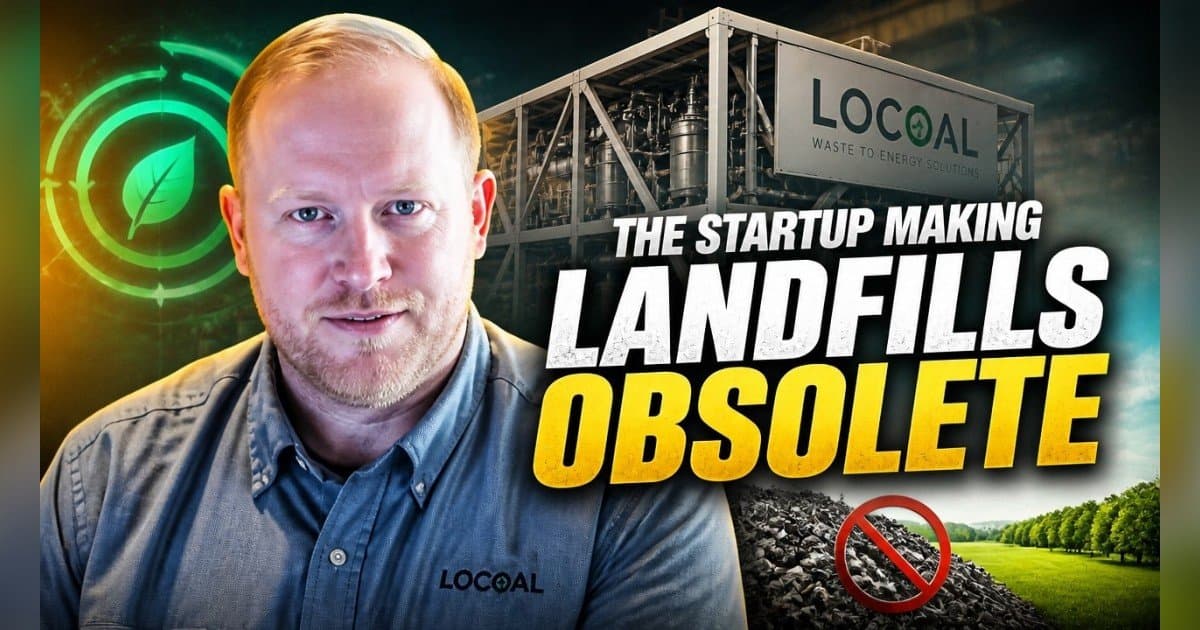
Texas county leaders got a direct pitch from LOCOAL co-founder and CEO Miles Murray on a December 2025 episode of The Building Texas Show: turn the mulch, storm debris, and old tires piling up at sites across the state into power instead.
Murray told host Justin McKenzie that those piles often sit a couple of miles off the interstate, out of view, and that the mulch market is close to saturated, so most material ends up in large piles that sit for long stretches. In dry seasons, he said, those piles become a fire risk. "These become fire hazards … They can be accelerants to very large wildfires that we've seen in the last decade," Murray said.
Fire officials share the concern. The Houston Fire Department's fire safety standard for wood waste processors states that "wood chipping, hogging, composting and mulching operations and storage create a significant fire hazard and are rated as a very high hazard." That regulatory recognition underscores why finding a productive use for these materials matters not just for waste management but for public safety.
LOCOAL developed its waste-to-energy system with support from the U.S. Air Force through the federal Small Business Innovation Research (SBIR) program. Federal SBIR records list Air Force Phase I and Phase II awards to the company, which describes itself as seed-funded by an AFWERX contract. "We developed this technology under the U.S. Air Force Small Business and Innovation Research Program," Murray said. "Once we're finished with the commissioning process, we'll be considered a phase three where you can directly procure our technology as a federal entity."
LOCOAL's first commercial unit is installed in Houston. The system uses pyrolysis, heating wood waste without oxygen, to produce electricity and a high-purity carbon product, and Murray said the company is also moving into rubber from tires. The unit is built to travel. "It's a 50-foot system that is basically your maximum flatbed sized module that can be transported," Murray said. "You could show up with eight flatbed trucks and within a couple of weeks you've got yourself a power plant that can move about 50 tons of material per system per day."
Murray framed the work as a way to make landfills obsolete. "So what would normally be a cost to somebody, we've turned into a revenue stream," he said. He also addressed skepticism about carbon markets, arguing that LOCOAL tracks its carbon from where the waste starts to where it ends up. "When you hear about things like carbon credits and people are like that's a bunch of hocus pocus … it is whenever you're measuring it from a helicopter over the Amazon," he said.
The conversation marks Murray's third appearance on The Building Texas Show, following episodes in 2023 and 2024.
For Texas counties, the implications are significant. With a modular system that can be deployed quickly and process up to 50 tons per day, officials could reduce wildfire risks, lower waste management costs, and potentially generate new revenue streams from electricity and carbon products. The technology's Air Force backing and pending Phase III status also signal federal validation, which could ease procurement for public entities. As Texas continues to grapple with drought and wildfire threats, LOCOAL's pitch offers a tangible solution that turns environmental liabilities into economic assets.