

Fredericksburg Banker: Local Deposits Fuel Hill Country Growth, Not Big-City Loans
Found this article helpful?
Share it with your network and spread the knowledge!
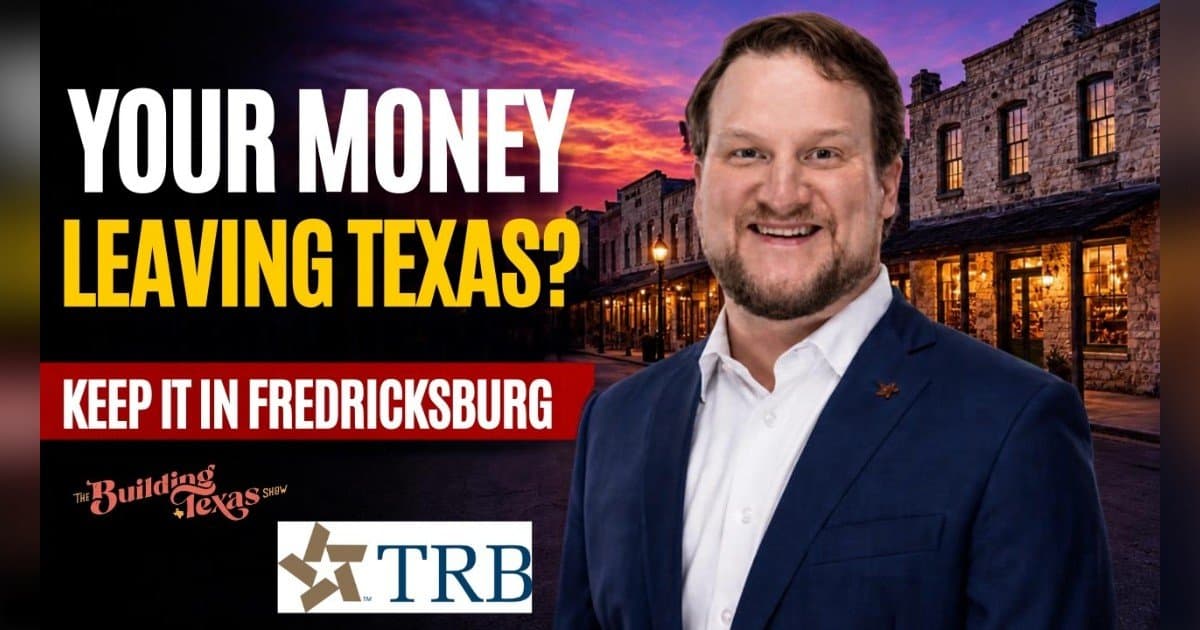
When Hill Country residents deposit money into national banks, those funds often finance large loans in New York, Chicago, and Los Angeles rather than local projects, according to John Wells, Market President for Texas Regional Bank in Fredericksburg. Wells made the case for community banking on the latest episode of The Building Texas Show, hosted by Justin McKenzie. The episode, titled Why Your Money Might Be Leaving Texas (And Where It Goes), becomes available October 21, 2026.
Wells drew a sharp distinction between national institutions and community lenders. “Nothing against the big banks, the big national banks, but all that money, all the deposits that are going into those banks are going straight to New York,” he said. “They are going to these giant loans in Chicago and New York and L.A., and they're not being reinvested here in the community.” Community banks like Texas Regional Bank and Security State Bank, by contrast, reinvest local deposits back into the communities they serve, Wells said.
That local reinvestment has visible results. Wells credited Dan Kemp and David Pedragon of Security State Bank as servant leaders who helped fund the Fredericksburg High School incubator. He also pointed to Little League jerseys bearing hometown bank logos as a tangible sign of which institutions support local youth. The conversation highlighted how community banks back small businesses, students, and civic life in ways that national banks may not.
The episode also explored Fredericksburg’s transformation into a national destination, including the arrival of the Waldorf Astoria and what it signals for tourism-led growth beyond the town’s traditional draws of peaches, antiques, and German heritage. Wells and McKenzie discussed the influx of remote executives from Austin and San Francisco, the housing-affordability gap that constrains young families, and the importance of relationship banking—why top operators keep an attorney, a CPA, and a banker on speed dial rather than simply shopping for rates.
Education and workforce development emerged as key themes. Fredericksburg ISD’s incubator and career and technical education programs, along with the Chamber of Commerce’s role under Jim McCulla, are part of the fight against Hill Country brain drain. Wells, incoming chair of the Fredericksburg Chamber of Commerce, previewed student pitches heading to the Texas Venture Fest in Mason. He also mentioned his wife’s work as sales director at Insight Gallery, underscoring the interconnected nature of the local business community.
For Texas businesses and savers, the message is clear: where deposits are held can determine whether local capital circulates within the community or flows to distant markets. As Fredericksburg and the Hill Country continue to attract attention and investment, the role of community banks in sustaining local entrepreneurship and affordability becomes increasingly critical. The full conversation offers a window into how one Hill Country town is navigating growth while striving to keep its Texas identity—and its money—close to home.