

Conesus Lake Waterfront Market Highlights Need for Cost Analysis Beyond Price
Found this article helpful?
Share it with your network and spread the knowledge!
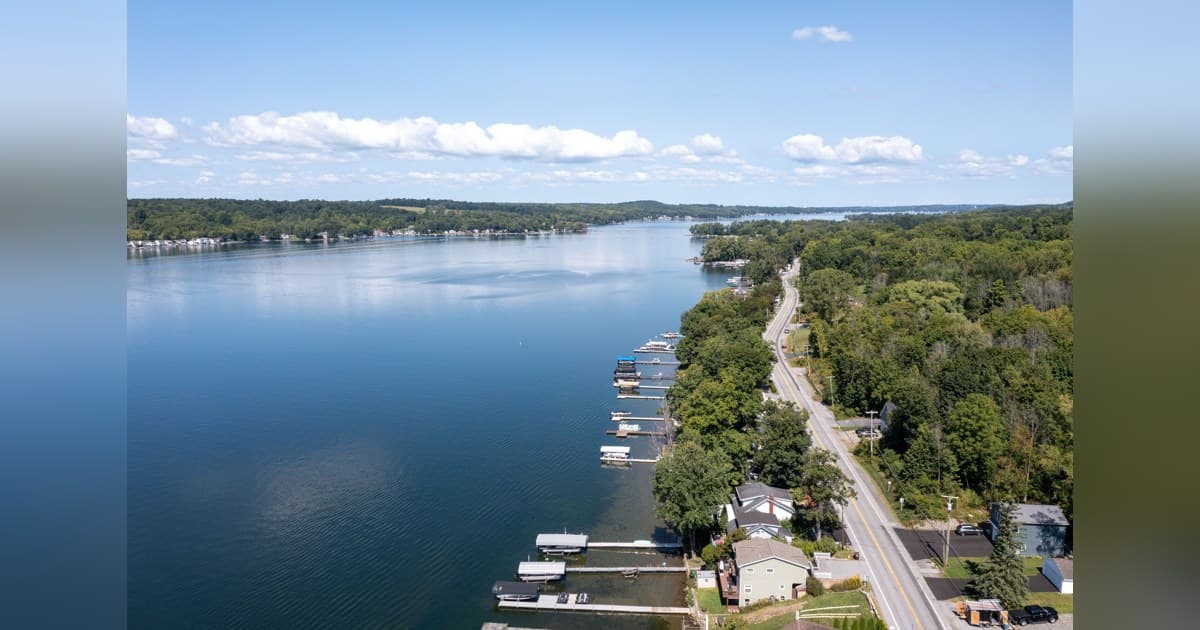
The Conesus Lake waterfront market in Livingston County recently saw fifteen properties close within 90 days for a combined total approaching $13 million, with a median sale price around $800,000, according to a review by The Sharman Team. While that median figure may serve as a convenient reference, experts caution that it can be misleading if applied uniformly across all properties. The reason, they say, is that lakefront properties are far from uniform, and the true cost of ownership extends well beyond the purchase price.
Matthew Sharman, team leader of The Sharman Team at Real Broker NY LLC, who specializes in the Conesus Lake waterfront market, explains that buyers often focus on the asking price while overlooking the ongoing expenses and potential pitfalls that come with lakefront ownership. “$800,000 is a useful reference point, but it can’t be applied across the board,” Sharman says. He notes that suburban homes lend themselves to algorithmic valuation because of their uniformity, but lake properties vary widely in usable frontage, slope, water depth, shoreline condition, and infrastructure such as septic systems and docks. These differences can significantly alter both the utility and resale value of a property.
Sharman emphasizes that a waterfront property valued without a physical inspection is a property valued on incomplete information. He advises buyers to consider three categories of costs: purchase costs, annual carrying costs, and larger replacements likely to arise later. Carrying costs include financing and closing fees, taxes, insurance, utilities, seasonal dock installation and removal, storage, and shoreline maintenance. Insurance warrants particular attention, especially flood coverage, which should be addressed early in the process. Additionally, older cottages often have quirks from decades of additions, and understanding those systems—along with having local providers who can service them—is part of the cost of ownership.
Usable waterfront is another critical factor that buyers frequently misread. “Fifty feet of lake frontage doesn’t automatically mean fifty feet of usable waterfront,” Sharman says. He advises buyers to ask concrete questions: Can you comfortably reach the water? Does the depth suit your boat? Is the shoreline sound? Does the dock configuration match your plans? Dock quality, while rarely cited as a make-or-break feature, can move value, particularly at the upper end. The ideal configuration, he says, is a gradual descent into the water that deepens further out, accommodating children, pets, and boats.
Where buyers get into difficulty, according to Sharman, is not in known costs but in assumed ones. “The most expensive mistakes on the lake usually aren’t inside the house,” he says. “They’re at the shoreline, underground, or in the paperwork that says how the property can legally be accessed and used.” He recommends converting assumptions into scope before making an offer: obtaining realistic estimates, consulting contractors, and confirming what is permitted. Shoreline work often requires permits and specialized construction, and rental income assumptions must be verified. Some assessments, such as breakwall condition and sewage ejection systems, fall outside a standard home inspection and require specialists.
For the Texas business community, the Conesus Lake example underscores a broader principle: in any real estate transaction, especially in unique markets, due diligence on ongoing costs and regulatory factors is essential. While the story originates in New York, the lessons resonate for Texas waterfront properties along the Gulf Coast and inland lakes, where similar variables can impact investment outcomes. Sharman’s advice to price the property as it will be owned rather than as it will be bought serves as a cautionary tale for buyers and a reminder for industry professionals to provide comprehensive guidance. “The goal isn’t to buy the cheapest house on the lake,” Sharman says. “It’s to know exactly what you’re getting for your money before you sign.”