

Adam Curry's 'MTV Chronicles' Podcast Exposes Media Machinery Behind Pop Culture
Found this article helpful?
Share it with your network and spread the knowledge!
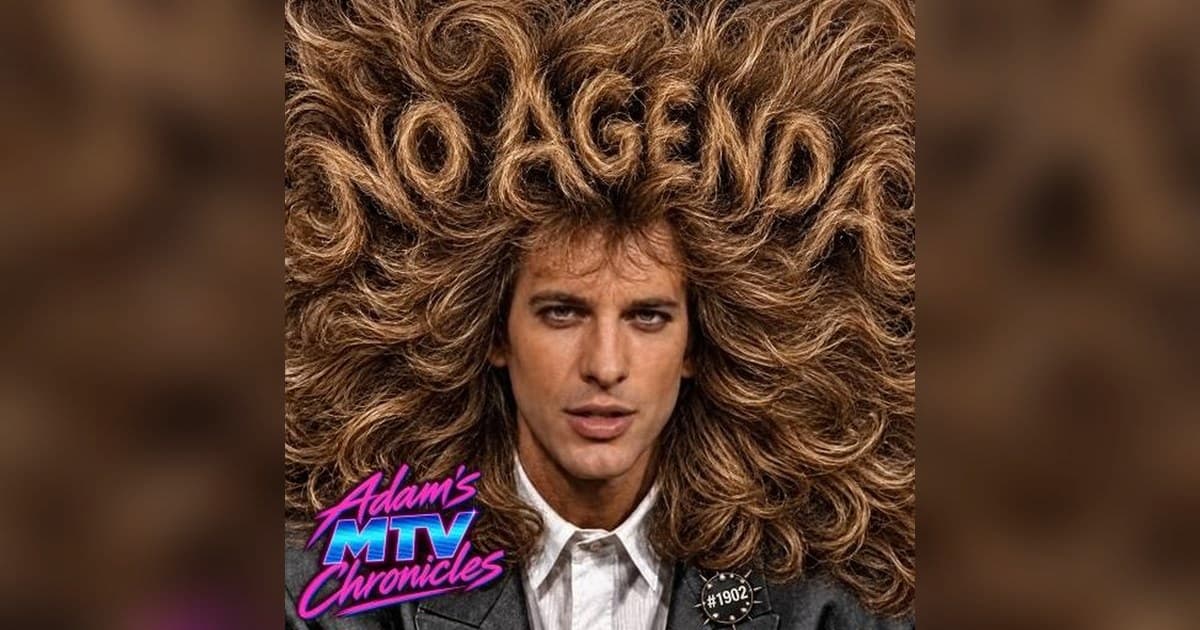
In a special best-of installment of the No Agenda Show, titled 'The MTV Chronicles,' host Adam Curry revisits his years as an MTV VJ, offering unfiltered accounts of the music industry's biggest stars and the corporate maneuvering that defined an era. Published on September 10, 2026, the episode features Curry and co-host John C. Dvorak, and it arrives as Curry travels from Rotterdam back to Austin and on to the Texas Hill Country, grounding the nostalgia in a contemporary Texas context.
The episode's value lies in its exposure of the machinery behind the music. Curry explains how MTV agreed to always follow a Michael Jackson video with the on-screen label 'the King of Pop,' a mandate that forced a full weekend of segments to be re-taped when missed. He recounts how Spring Break was invented in 1990 as a vehicle to lure Budweiser advertising to the network, and how Gene Simmons of KISS once burst into a music meeting wearing kneepads. These stories illustrate that pop culture is often a product of calculated business decisions, a lesson that resonates for Texas entrepreneurs building brands in today's attention economy.
Geopolitical undercurrents also surface. Curry frames the 1989 Moscow Music Peace Festival, billed as anti-drug and anti-alcohol, as a CIA operation tied to manager Doc McGee's Learjet drug bust. Dvorak adds color from a late-1980s Moscow visit, describing painted-over listening mics at the Mir Hotel and Reagan's post-visit shift on the 'evil empire.' For Texas businesses with global ambitions, the episode underscores how cultural events can double as instruments of soft power and diplomacy.
Curry's personal anecdotes add a human dimension. He describes a midnight car ride to Prince's Paisley Park in Minneapolis during a 1991 Sam Goody Musicland commercial shoot, where a warning that he was 'too tall and too white' to approach the host did not stop him. 'I go over and I say, hey, hey, I'm Adam. Thanks for inviting me. It's very cool. He says, hey, yeah, good you came,' Curry recalls. On a 1989 Moscow flight, he witnessed Ozzy Osbourne, stranded outside an occupied lavatory with Sharon at his side, wetting himself in the aisle, calling it 'probably the saddest thing I've ever seen in rock and roll ever.' Such moments reveal the unvarnished reality behind celebrity personas.
The episode also traces Curry's disputes with corporate power. He describes suing MTV Networks over the MTV.com domain, a case that shaped his skeptical view of corporate storytelling. He credits Axl Rose and executive Doug Herzog with ending his Headbangers Ball run. These accounts highlight the importance of intellectual property and the risks of relying on corporate platforms, issues that remain relevant for Texas media startups and content creators.
For listeners in Texas and beyond, 'The MTV Chronicles' offers more than nostalgia. It provides a case study in how media, business, and politics intersect, and it reminds us that today's cultural landscape is shaped by similar forces. The episode is available now wherever podcasts are heard, with a special guest co-host segment featuring producer Dana Brunetti scheduled for the following Sunday. As Curry settles back into the Texas Hill Country, his stories serve as a timely reminder that understanding the business behind the art is essential for anyone looking to make an impact.